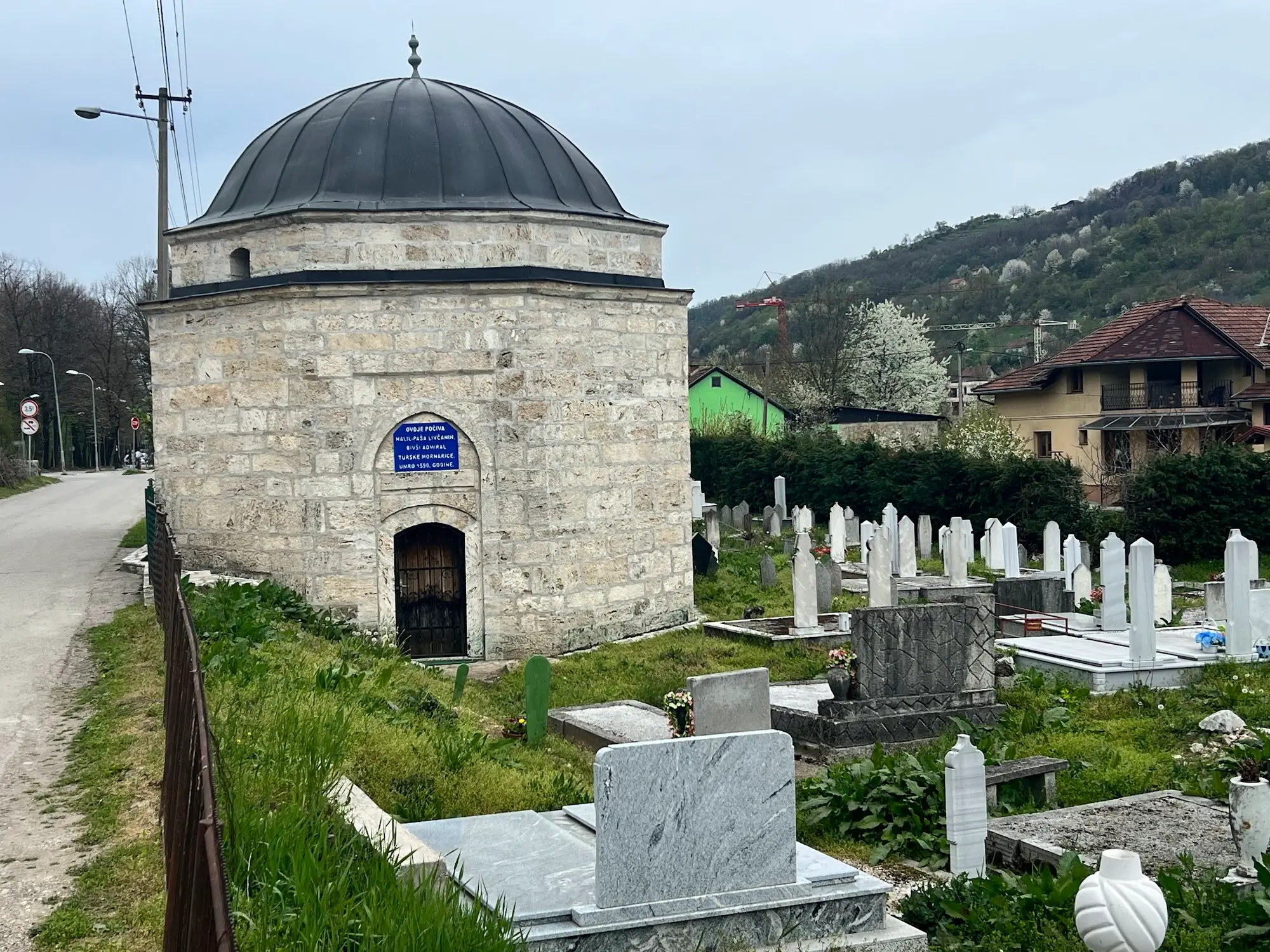
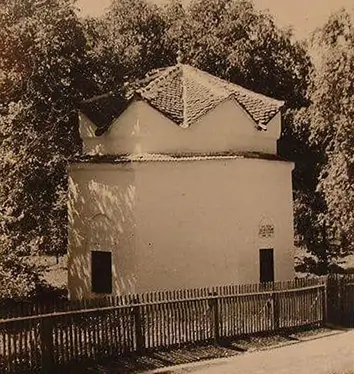
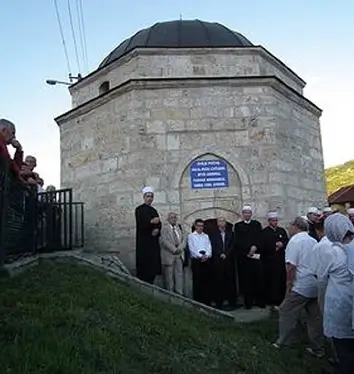
The Halil-Pasha Turbe and cemetery in Banja Luka have been declared a national monument of Bosnia and Herzegovina (Official Gazette of BiH, No. 33/04). Located between the former Lower and Upper Šeher, it represents one of the most significant examples of Islamic architectural heritage in this region. The mausoleum is built on an octagonal base and is an enclosed structure, featuring a dome that symbolizes the monumentality of Ottoman architecture.
History
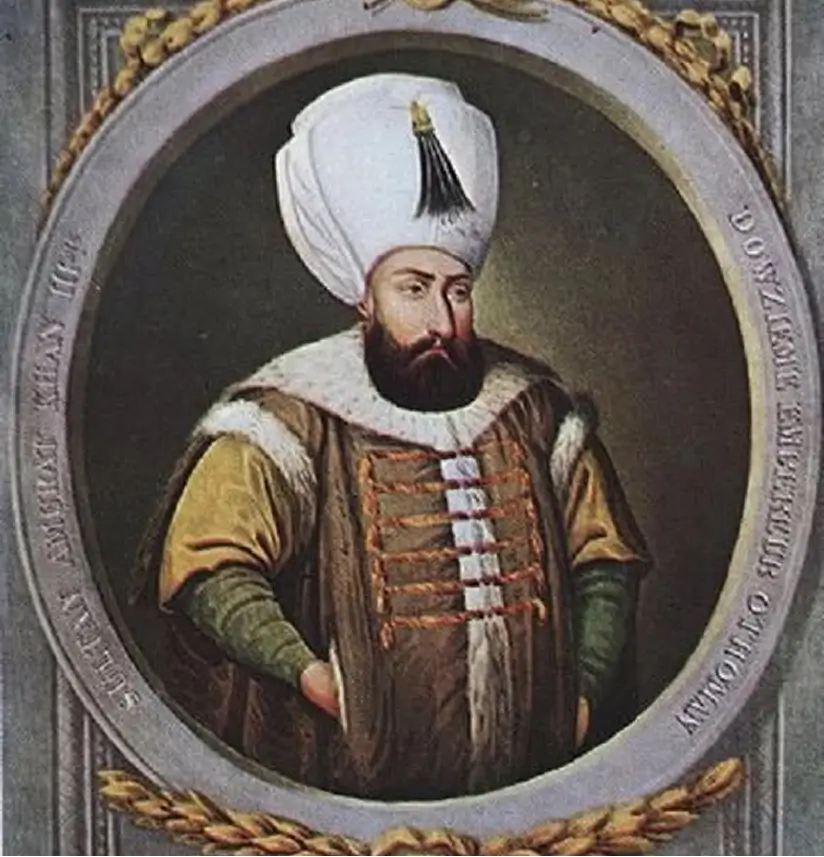
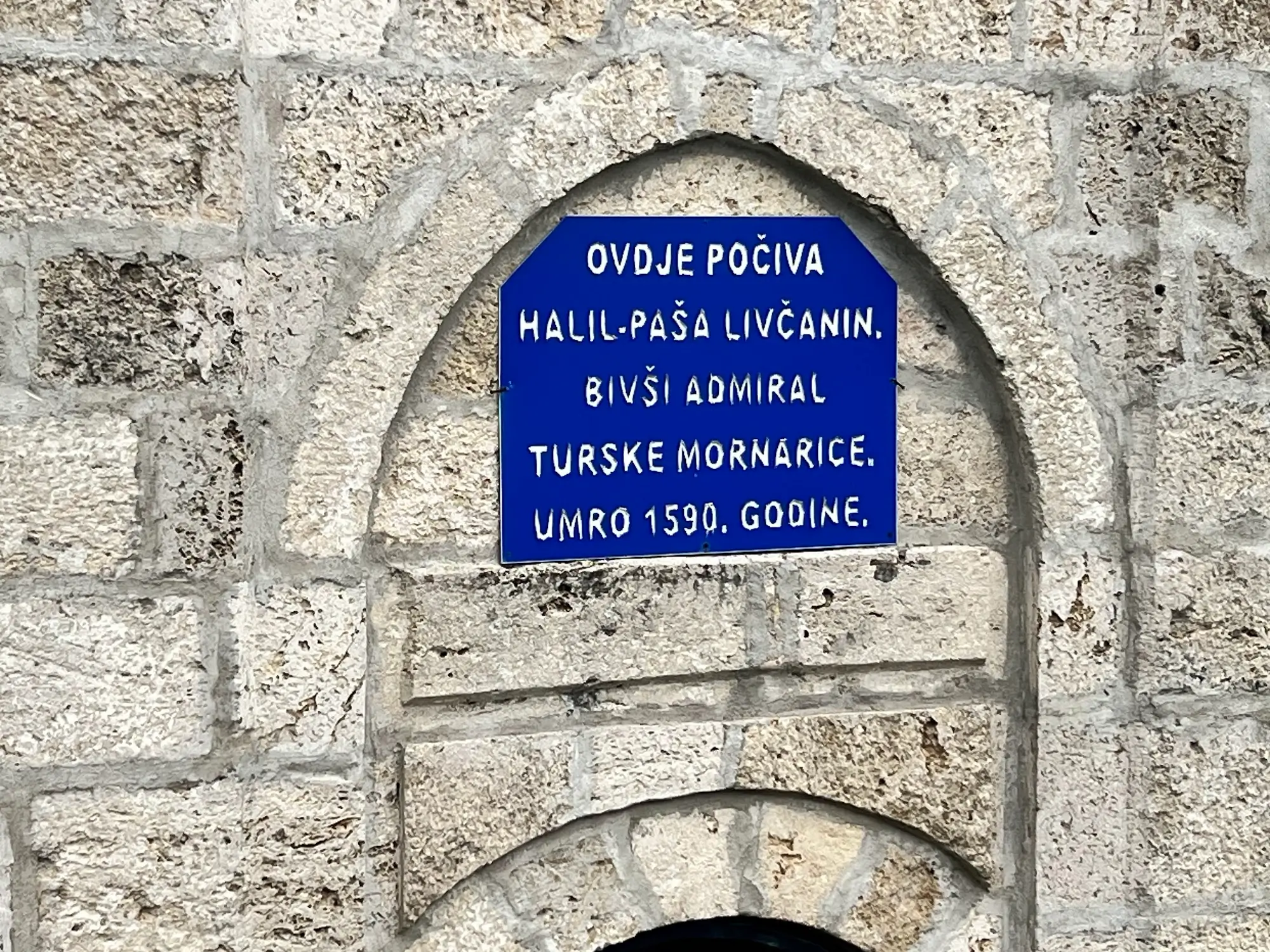
Halil-Pasha was a son-in-law to the Sultan, having married Fatima, the daughter of Sultan Murad III. Before coming to Bosnia, he served as an admiral in the Ottoman navy. He was appointed Bosnian Beylerbey in 1588, following the transfer of Ferhad-Pasha Sokolović to Buda. According to tradition, he was born in Lijevče Polje, while local legend links him to Banja Luka. He built a mosque in the Gradiška district. According to research by Nedim Zahirović, the person actually buried in the mausoleum is Halil-Pasha Memibegović, who was never a Bosnian governor. The true Bosnian governor, Halil-Pasha, was buried in the courtyard of the Atik Mosque in Istanbul in 1603.
Destruction and Restoration
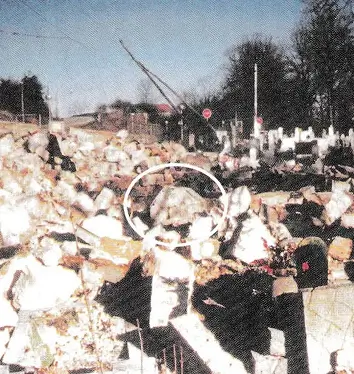
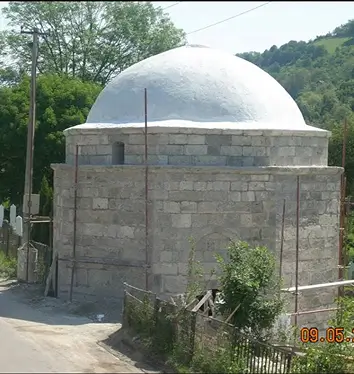
The mausoleum was first restored in 1959. It was destroyed by explosives on December 15, 1993, an event that also destroyed the surrounding graves. Halil-Pasha's grave remained intact, while the grave of his standard-bearer was destroyed. Restoration was completed in 2014, returning the mausoleum to its monumental appearance.
Tradition
According to popular belief, the mausoleum was built in honor of Halil-Pasha's kindness and justice. His personality remains deeply etched in the collective memory, and the mausoleum is considered a symbol of the people's gratitude.
Exterior
The floor plan of the mausoleum is octagonal. Three windows are built into three opposing walls, while the fourth wall features an entrance with a masterfully crafted arch. The dome is vaulted with stone and covered on the outside by a low conical roof. Its current appearance consists of travertine stone walls, a metal-covered dome, and a finial featuring two spheres, a crescent, and a star.
Interior
The interior of the mausoleum contains two cenotaphs: a larger one for Halil-Pasha and a smaller one for his standard-bearer. The mausoleum did not have a tarih (inscription) on the tombstones, which makes it unique compared to other monuments of that time.