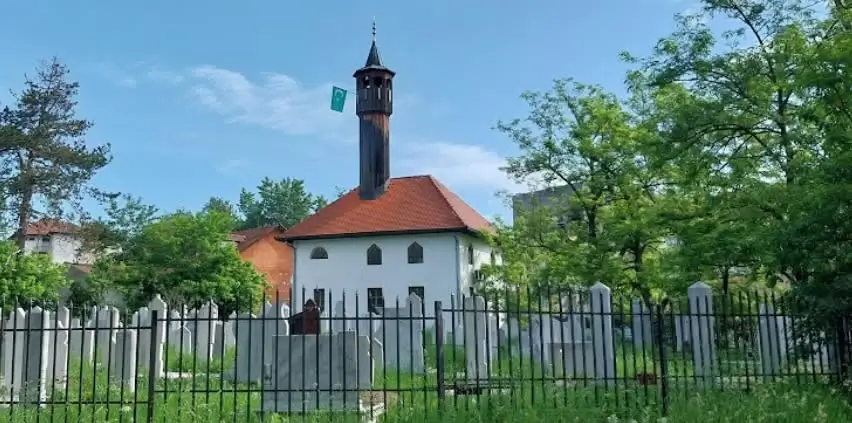
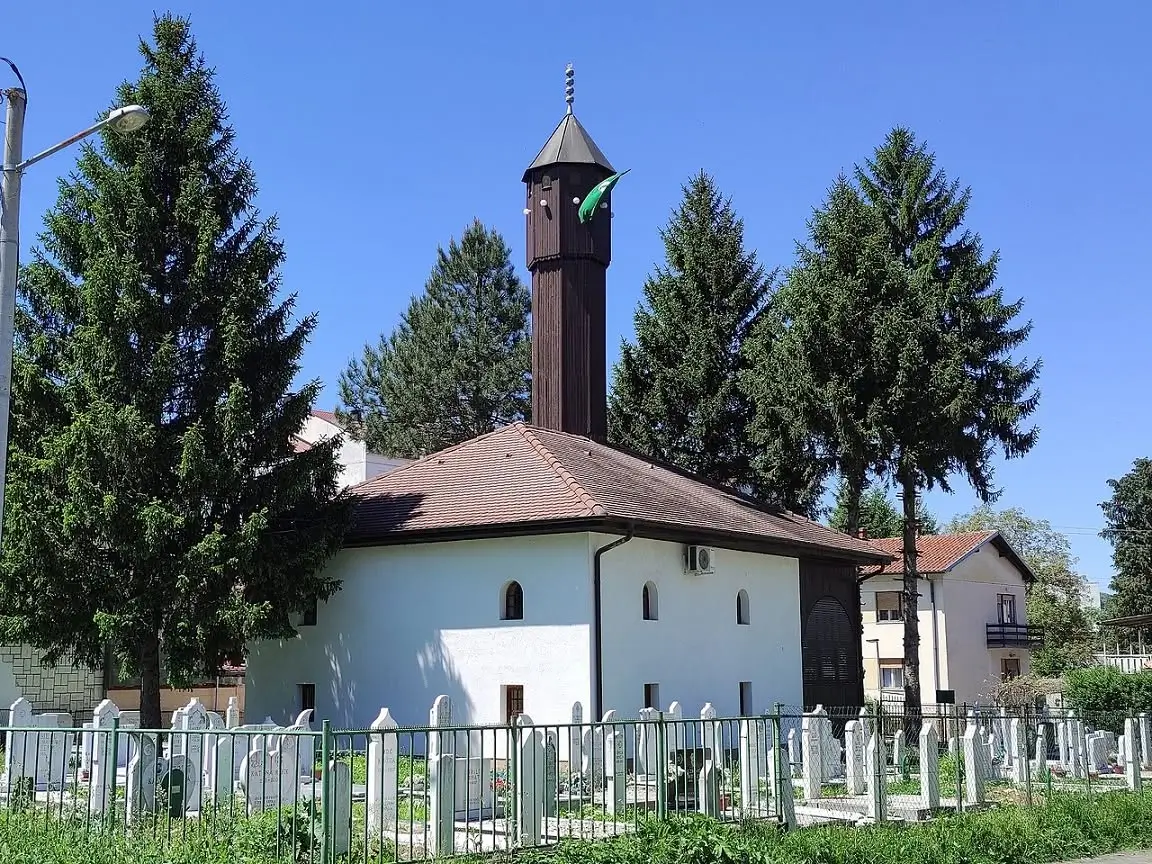
Hadži Perviz Mosque, also known as the Potok Mosque, is located in the Banja Luka neighborhood of Potok, a former residential district that developed on the right bank of the Vrbas River. Built in 1630, it stands as a valuable monument of Islamic architecture and part of Banja Luka's cultural and historical heritage.
For centuries, the mosque served as the center of religious life for the residents of this neighborhood, as well as an essential part of its origin and development. Thanks to the endowment (waqf) of its founder, a new neighborhood formed around the mosque, gaining special significance in the city's urban development.
Who was Hadži Perviz?
The mosque was founded by Hadži Perviz, a prominent 17th-century resident of Banja Luka. Through his waqf deed, drafted and certified in 1630 by the renowned Sarajevo poet and then-Banja Luka judge Muhamed Nerkesi, he provided the funds for the construction and maintenance of the mosque.
To ensure the permanent operation of his endowment, Hadži Perviz endowed several commercial properties, including shops, gardens, and monetary funds. The income from this waqf was used to maintain the mosque and pay its staff, a practice characteristic of the Ottoman waqf system.
The Origin of the Potok Neighborhood
The construction of the Hadži Perviz Mosque had a major impact on the development of this part of Banja Luka. The building of the mosque and the establishment of the waqf led to the creation of a new neighborhood, which was initially called the New Neighborhood (Nova mahala).
Because of a stream (potok) that flowed near the mosque, the building became known among the locals as the Potok Mosque, and over time, the name of its founder, Hadži Perviz, became less well-known than the popular name.
Architecture of the Potok Mosque
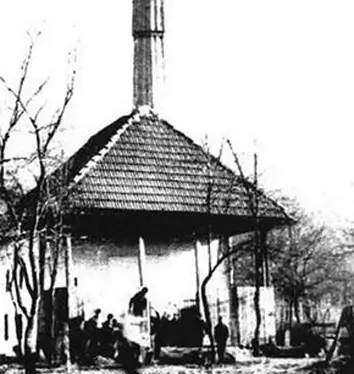
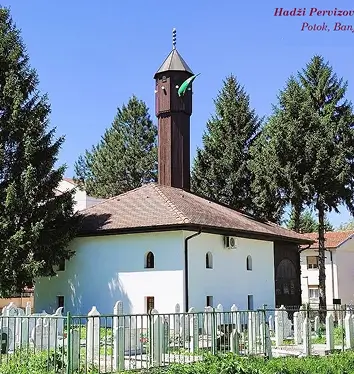
The Hadži Perviz Mosque belonged to the type of smaller, single-room mosques with a wooden minaret. In terms of dimensions, it was one of the smallest mosques in Banja Luka, yet its simple and harmonious architecture made it a valuable example of traditional Bosnian construction.
Adjacent to the mosque was a local cemetery, which formed an integral part of this historical complex.
Destruction and Restoration of the Hadži Perviz Mosque
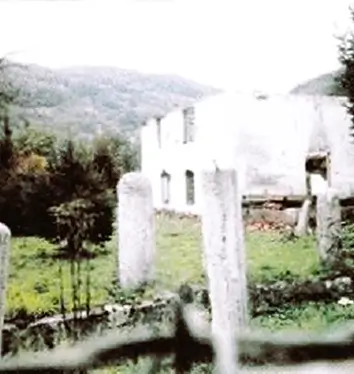
During the war in Bosnia and Herzegovina, the Hadži Perviz, or Potok, Mosque was set on fire and severely damaged on September 6, 1993. The roof, wooden minaret, and porch were destroyed, and the walls of the building suffered extensive damage.
Due to its historical and cultural value, the site and remains of the Potok Mosque were declared a national monument of Bosnia and Herzegovina in 2003.
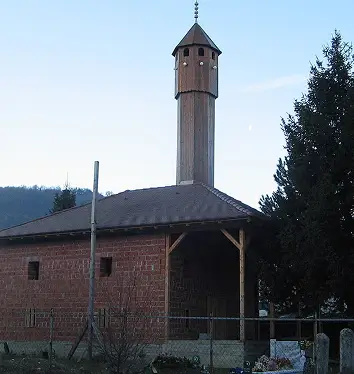
Restoration of the mosque began shortly thereafter, with work completed in 2011. The restored building once again became a gathering place for worshippers and an important part of the cultural identity of this part of Banja Luka. The first Friday prayer (Jumu'ah) after the restoration was held in July 2011, following an eighteen-year hiatus.
Cultural Significance of the Potok Mosque
Today, the Hadži Perviz Mosque stands as a significant monument testifying to the development of Banja Luka during the Ottoman period. Its value lies not only in its architecture but also in the story of the waqf, the formation of the neighborhood, and the people who shaped the city's appearance through their endowments.
Located in the Potok neighborhood, this mosque preserves the memory of a time when residential districts formed around religious buildings, trade flourished, and the urban structure of Banja Luka was created.
Visiting the Hadži Perviz (Potok) Mosque
Today, the Hadži Perviz or Potok Mosque is one of Banja Luka's valuable historical sites. For visitors interested in Islamic architecture, cultural heritage, and the city's history, it is a place where they can learn the story of one of Banja Luka's oldest endowments.
Its restoration symbolizes the preservation of cultural heritage and the continuation of a tradition that has lasted for nearly four centuries.



.webp)