The Vrbanja Mosque is located in the Vrbanja neighborhood of Banja Luka, along the river of the same name that flows through this part of the city. It is one of the significant religious and cultural-historical landmarks of Banja Luka, with a tradition dating back to the 16th century. The first foundations of the mosque were laid during the Ottoman period, when neighborhoods across Bosnia and Herzegovina were formed around religious sites.
Throughout its long history, the Vrbanja Mosque has been renovated several times and has served as a gathering place for local residents, preserving the spiritual and cultural traditions of the community that developed along the Vrbanja River.
History of the Vrbanja Mosque
The first mosque in the Vrbanja congregation was built during the 16th century. Due to the growth of the settlement and the needs of the local population, a new mosque was later erected, built of stone and adobe, which represented an important part of the area's architectural heritage. This structure was built in 1885.
After the devastating earthquake that struck Banja Luka in 1969, the old mosque was severely damaged and demolished. A few years later, in 1973, a new building was constructed, which represented a more modern interpretation of mosque architecture.
Architecture of the Vrbanja Mosque
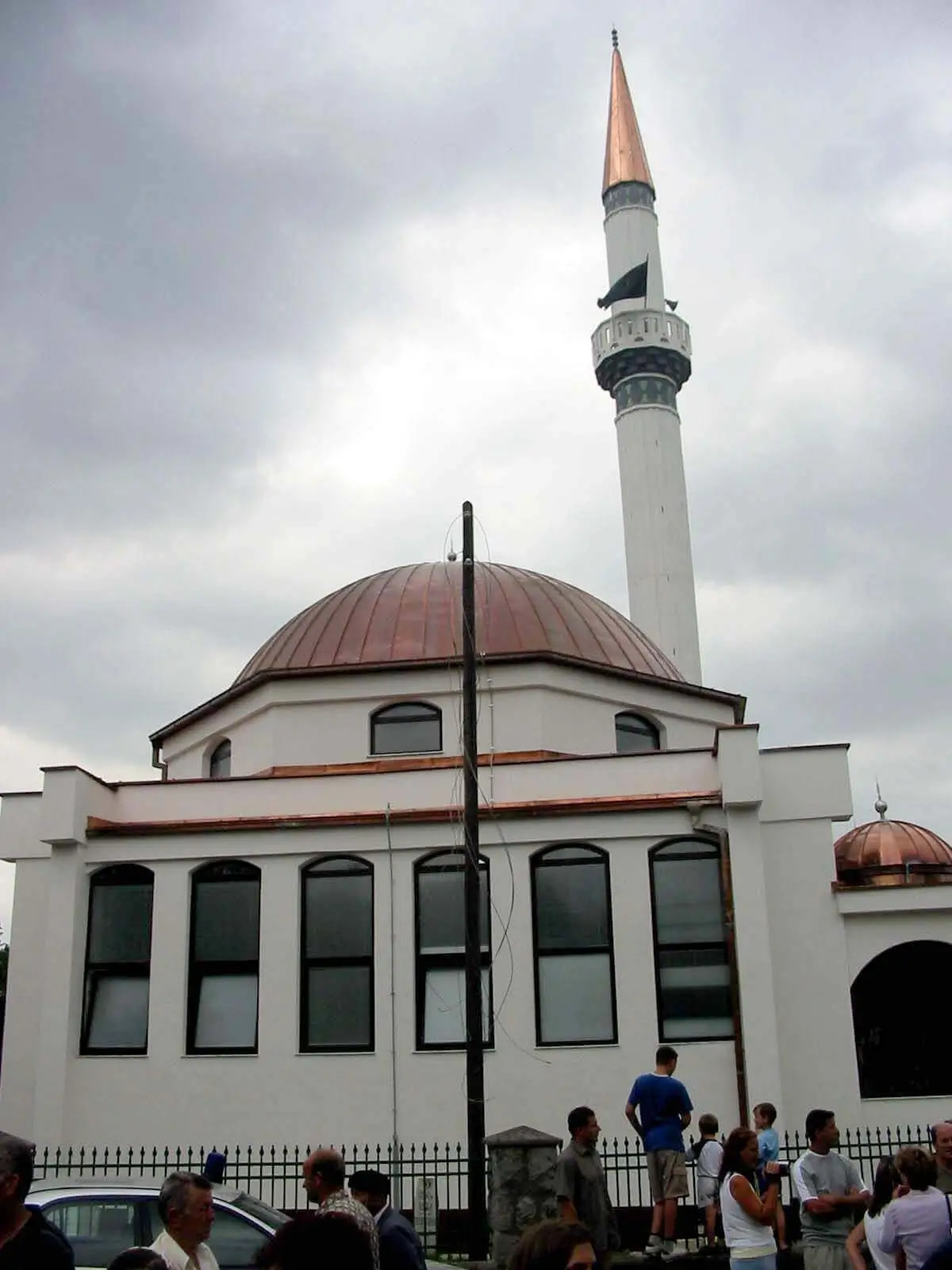
The new Vrbanja Mosque, built in 1973, featured a distinctive design with one large and three smaller domes, distinguishing it from the traditional neighborhood mosques with wooden minarets that were common in the Banja Luka region.
The more spacious prayer area and the prominent domed structure made it a recognizable religious landmark in Vrbanja and an important part of the neighborhood's landscape.
Destruction and Reconstruction of the Mosque
During the war in Bosnia and Herzegovina, the Vrbanja Mosque was demolished on May 11, 1993, breaking its decades-long continuity. Its destruction was a great loss for the residents of Vrbanja and for the cultural heritage of Banja Luka.
After the war, the reconstruction of the mosque began, and the work was completed a few years later. The restored Vrbanja Mosque was officially opened on July 19, 2003, when it once again became a place of prayer and gathering for the local community.
The Significance of the Vrbanja Mosque Today
Today, the Vrbanja Mosque represents an important part of the cultural and historical heritage of Banja Luka and a symbol of the restoration of religious sites that have historically been an integral part of the city's identity.
Its story spans several centuries, encompassing natural disasters, wartime destruction, and a successful restoration, making it a significant site for understanding the history of Vrbanja and the development of Banja Luka.
Visiting the Vrbanja Mosque
Located in the peaceful setting of the Vrbanja neighborhood, along the river of the same name, the mosque is an interesting location for anyone wishing to discover the cultural diversity of Banja Luka and its rich past.
For enthusiasts of history, architecture, and the cultural heritage of Bosnia and Herzegovina, the Vrbanja Mosque offers insight into a centuries-old tradition and the story of preserving one of the significant symbols of this part of the city.


.webp)

.webp)
%20(1).webp)
.webp)
%20(1).webp)
%20(1).webp)
%20(1).webp)
.webp)