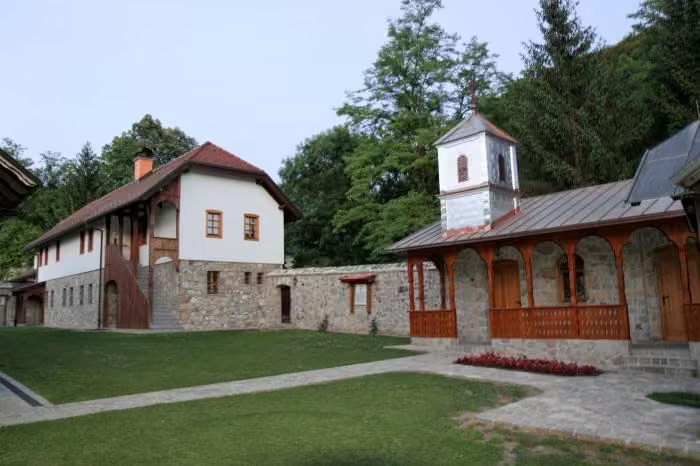
The Gomionica Monastery is located in the village of Kani near the Bronze Maidan, west of Banja Luka, and is dedicated to the Feast of the Annunciation of the Most Holy Theotokos. Its name occurred in the folk tradition in different forms, such as Gomlenica, Gomilnica or Merit. The oldest reliable clues about the existence of the monastery date back to the XVI century, although there are assumptions that it could have roots in an earlier period. During the Ottoman rule, Gomionica was one of the few places of refuge of the Orthodox people in the Bosnian Krajina, a place where faith, literacy and folk traditions were preserved.
Throughout the XVII and XVIII centuries the monastery maintained continuity of worship and education, and in the XIX century it became a symbol of popular resistance and strength. Petar Kocic, a great Serbian writer and fighter for the rights of the people, often pointed out in his works Gomionica as a place that carried the spirit of freedom and resistance. It was precisely because of this role that the monastery was deeply rooted in the consciousness of the Krajina people.
In 1953. Gomionica was declared a cultural monument, confirming its importance for the cultural and historical heritage. The earthquake in Banja Luka in 1969 severely damaged the monastery, but in the period from 1971 to 1976 it was restored and rehabilitated. During the restoration in 1982, older frescoes in the dome were discovered, which date back to the time of the construction of the church and testify to its antiquity and artistic value.
The Commission for the Preservation of National Monuments of Bosnia and Herzegovina declared Gomionica a national monument in 2006. Today, the monastery of the Diocese of Banja Luka is active, where services are regularly held, and it is visited by believers, tourists and researchers. Its peaceful environment, preserved architecture and rich history make it one of the most important monasteries in Bosnia and Herzegovina.
The monastery complex includes a church, hostels and accompanying facilities, and is surrounded by nature, which further emphasizes its spiritual atmosphere. Throughout the centuries, Gomionica has been and remains a pillar of the spirituality, culture and identity of the Serbian people, testifying to perseverance and faith despite all the temptations. Her role was not only religious, but also cultural and educational, because in difficult times she preserved literacy and folk traditions.
Today, in addition to being a place of prayer and gathering, Gomionica is also a place where past and present meet. It recalls the power of faith and communion, but also the importance of preserving cultural heritage. Every stone and fresco in its walls testify to centuries of existence and to the people who found refuge and strength in it. Gomionica Monastery remains one of the most important spiritual and cultural centers of the Republic of Srpska, preserving the memory of the past and providing hope for the future.




.avif)

.avif)